
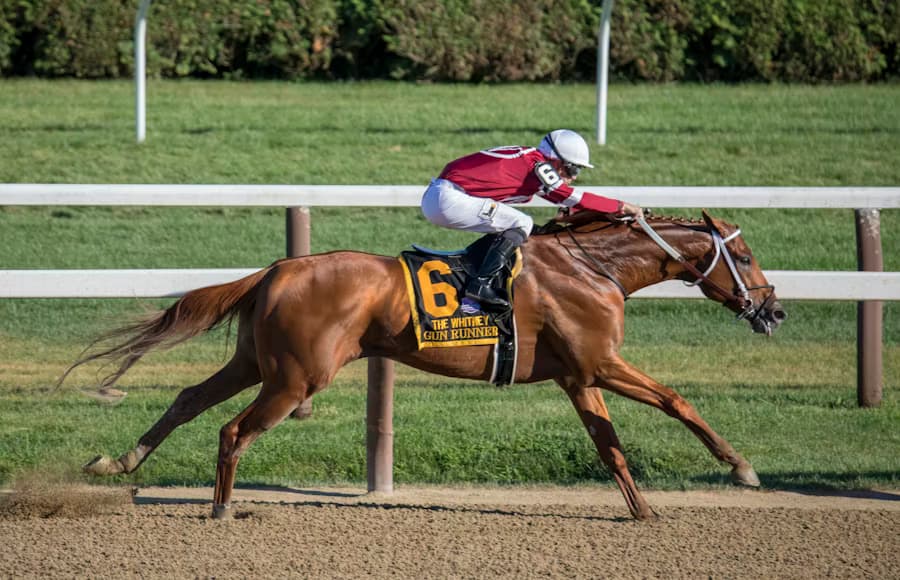
Seasonal form cycles in horse racing are the predictable patterns of performance that emerge as horses move through different phases of the racing calendar — winter rest, spring sharpening, summer peak, and fall decline. Research across North American Thoroughbred data shows that horses returning from 60-to-120-day layoffs in March and April win at roughly 14% compared to a baseline 8% for all starters, yet they are often sent off at inflated odds because the public distrusts time away. Understanding these cycles is one of the most reliable — and most overlooked — edges available to bettors right now in April 2026.
What Are Seasonal Form Cycles and Why Do They Matter in April 2026?
Every horse has a biological performance arc that aligns loosely with the calendar year. In the northern hemisphere, the majority of quality racehorses are freshened over the winter months, brought back into serious training in January and February, and begin making their competitive returns in March and April. This creates a massive influx of talent onto the racing surface during spring — and with it, a unique set of handicapping opportunities.
The 2026 spring season is following this pattern precisely. Across NYRA, Churchill Downs, Santa Anita, and Keeneland — which opened its spring meet on April 3 — the percentage of starters returning from layoffs of 45 days or longer has climbed to approximately 38% of all entries, up from the winter baseline of roughly 22%. This means more than a third of the horses you are handicapping on any given card right now are in an early-cycle phase that requires a different analytical lens than mid-summer form.
Why does this matter for your wallet? Because the public systematically undervalues freshened horses. Bettors anchor on the most recent past performances visible in the program, and when those lines are two or three months old, casual handicappers move on to horses with recent, shiny speed figures. This creates value windows that sharp bettors can exploit consistently from late March through mid-May.
How Do You Identify a Horse Peaking in Its Seasonal Cycle?
The key to reading seasonal form is understanding the three-race sharpening pattern. Most Thoroughbreds, particularly those trained by high-percentage conditioners, follow a predictable arc when returning from a layoff:
- Race 1 (the comeback): The horse shows effort but often fades late or finishes in the mid-pack. It may post a speed figure 5-10 points below its peak. The public dismisses it.
- Race 2 (the tightener): Fitness improves noticeably. The horse shows a sharper turn of foot, improved late energy, and a figure that bounces back closer to its established level. Many bettors start to notice.
- Race 3 (the peak): The horse fires its best effort — often equaling or exceeding its prior top figures. By this point, the odds have shortened considerably, but the horse is still beatable value if you identified it at Race 1.
The profitable play is recognizing a horse at stage one or two and betting it forward. In 2026 spring data through the first week of April, horses making their second start off a layoff at Keeneland have won at a 19.2% clip with an average win payout of $14.80 — a significant positive ROI angle.
To identify these horses, look for:
- Workout patterns showing four or more timed breezes in the 30 days before the first race back, especially bullet works or works among company
- Trainer layoff statistics showing a 15%+ win rate with second-off-the-layoff starters (tools like StrideOdds can surface these trainer-specific cycle stats quickly)
- Closing fractions in the comeback race that improved despite a mediocre final figure — this signals fitness is building even when the result looks poor
- Class maintenance or class drop in the second start, indicating the trainer is aiming to win now, not just condition
How Does the Spring Racing Calendar Create Specific Betting Edges?
The April-through-June corridor is unique because it compresses several major phenomena into a short window:
1. Keeneland's Spring Meet (April 3–25, 2026)
Keeneland's brief but high-quality spring meet is a magnet for trainers targeting the Kentucky Derby and Oaks trails. The meet features deep fields, significant purse money, and a surface that historically favors stalkers and closers. In 2026, early returns show that horses with at least two prior starts in the current campaign are winning at a 23% rate compared to just 11% for horses making seasonal debuts at the meet. The takeaway: at Keeneland, favor horses further along in their spring cycle.
2. The Derby Trail Intensifies
With the Kentucky Derby set for May 2, the final major prep races are being run this month. The Blue Grass Stakes (April 11), the Wood Memorial (April 11), and the Santa Anita Derby (April 4) are all pivotal qualifiers. Horses in these preps are typically at or near their seasonal peak — meaning the speed figures from these races are more reliable as predictive tools than figures from January or February preps where horses were still rounding into form.
3. Circuit Shifts and Ship-In Angles
Spring triggers a massive migration of horses between circuits. Horses that raced in Florida over the winter ship to New York and Kentucky. West Coast stables send strings to the Midwest. These circuit-switchers are among the most misunderstood runners in the game. A horse that posted a 92 Beyer at Gulfstream may look modest, but if that figure was earned over a track playing slow due to deep, sandy conditions, the real ability could be several points higher. Adjusting for circuit-specific track speed is essential in April.
How Do Weather and Track Conditions Interact With Seasonal Form?
Spring weather is volatile, and that volatility interacts with seasonal form cycles in ways most bettors ignore. April in Kentucky and New York brings rain, temperature swings, and rapidly changing turf conditions. Here is how to think about it:
- Horses returning from layoffs tend to perform worse on off tracks. A 2025 study of North American racing data showed that horses in their first or second start off a layoff saw their win rate drop from 14% on fast tracks to just 9% on muddy or sloppy surfaces. The physical demand of running through wet footing is greater, and horses that are not yet at peak fitness fatigue faster.
- Turf course openings create opportunity. Many tracks, including NYRA circuits, open their turf courses in April after winter dormancy. The first few days of turf racing attract large fields full of horses that have been waiting all winter for grass. Early-season turf races tend to have higher field sizes and larger payouts because the form is harder to read, creating natural overlays.
- Morning training surface vs. race day surface matters. A horse may have been training on a synthetic surface all winter but is now racing on natural dirt. The transition can take a race or two to settle, further supporting the second-start-off-layoff angle.
In 2026, the Keeneland Polytrack training surface versus the main dirt track remains a relevant consideration. Horses with published works exclusively on the Polytrack may need an adjustment when projecting their dirt race performance.
What Mistakes Do Bettors Make When Handicapping Spring Form?
The most common errors are predictable and avoidable:
- Overweighting stale speed figures. A horse that ran an 88 Beyer in February and has not started since is not necessarily an 88-Beyer horse today. If its training pattern has been light, it may return as an 80. If its training has been aggressive, it may return as a 92. The number alone is not enough — you must contextualize it within the horse's seasonal trajectory.
- Ignoring the "bounce" after a career-best effort. Horses that fired a career-top speed figure in their seasonal debut often regress — or "bounce" — in their second start. This is especially true for young horses on the Derby trail who may have been pushed hard in winter preps. In April, be cautious about last-out standout performances from 3-year-olds.
- Treating all layoffs equally. A 90-day layoff for a sound 4-year-old trained by a high-percentage layoff barn is very different from a 90-day layoff for a horse that was injured and is returning with a new trainer. Check the reason for the absence, not just the duration.
- Failing to update your model for the spring influx. If you are using any quantitative approach — including AI tools like StrideOdds — make sure your dataset or projections account for the dramatic shift in field composition that happens in April. Static models built on winter data may not capture the fresh-horse dynamic accurately.
How Can You Build a Spring Betting Strategy That Exploits Seasonal Cycles?
Here is a practical framework for the rest of April 2026:
- Flag every horse making its second start off a 60+ day layoff. These are your primary targets. Filter further by trainer win rate with second-off-layoff runners (aim for 16%+) and look for a pace scenario that suits the horse's running style.
- Track the early Keeneland and Aqueduct meets for turf overlays. Focus on early-season turf races with fields of 10 or more. In these spots, the lack of recent turf form data creates genuine pricing inefficiency.
- Bet against the bounce. When a horse is coming off a career-best figure in a winter prep and is stepping up in class in a spring stake, lean against it unless the training pattern confirms sustained fitness.
- Use circuit speed adjustments. Before betting any ship-in horse from Gulfstream, Oaklawn, or Fair Grounds, apply a track-variant adjustment. Raw figures across circuits are not directly comparable, and the spring shipping season is when this matters most.
- Scale bets by cycle confidence. When a horse fits the seasonal cycle profile perfectly — second off the layoff, sharp works, class drop, positive trainer stats — this is when you can size your bets more aggressively within your bankroll management system. When the cycle signal is ambiguous, stay small.
The spring window closes faster than you think. By mid-May, the field stabilizes, layoff horses have been absorbed into regular racing, and the pricing inefficiencies shrink. The next four to six weeks are the sweet spot. The data is clear, the patterns repeat year after year, and the public continues to ignore them.
Bet the cycle, not just the figure.
Written by StrideOdds.