
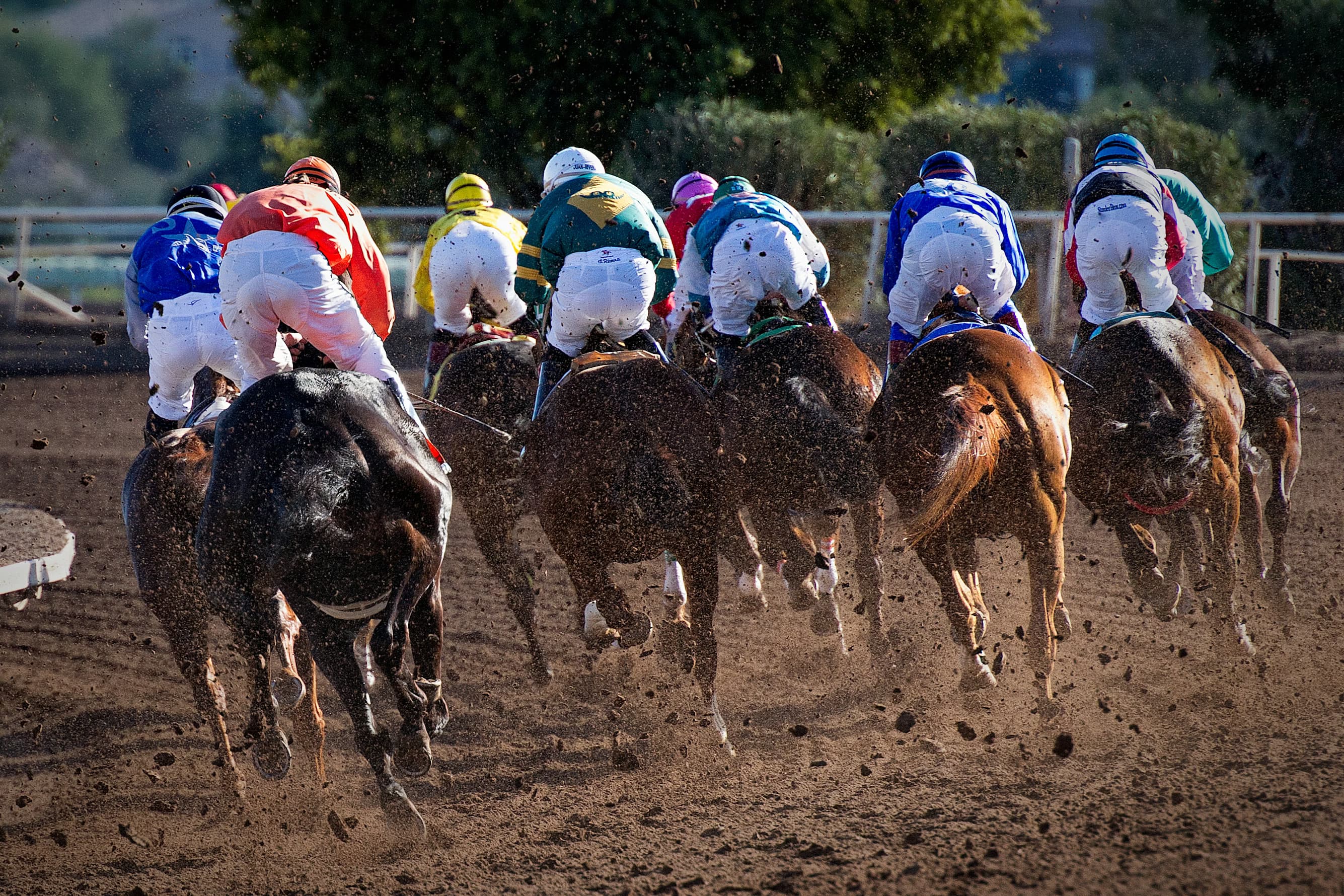
Field size in horse racing refers to the total number of horses entered and running in a single race, and it is one of the most underrated variables in profitable betting. In 2026, the average North American thoroughbred field has approximately 7.8 starters, but individual races range from as few as 4 to as many as 20 in major events like the Kentucky Derby. Field size directly impacts win probability distribution, the viability of exotic wagers, the likelihood of longshot upsets, and how much value the betting pools actually contain — yet most recreational bettors never adjust their strategy based on it.
Why Does Field Size Matter So Much in Horse Racing Betting?
Field size is the single biggest structural factor that determines how your money behaves once it enters the pari-mutuel pool. Consider the math: in a 5-horse field, the random baseline probability of picking the winner is 20%. In a 14-horse field, that baseline drops to just over 7%. This isn't a trivial difference — it cascades through every bet type.
Here's what changes as field size increases:
- Win bet difficulty rises, but so does potential payout for correctly identifying the winner.
- Exotic wager pools grow because more permutations exist, which means bigger payoffs for trifectas, superfectas, and multi-race bets.
- Chalk vulnerability increases because more runners create more chaos — traffic trouble, pace disruptions, and wider trips become more common.
- Longshot win rates climb in larger fields. Data from the 2025–2026 North American racing season shows that horses at 10-1 or higher won approximately 18% of races with 12+ runners, compared to only 9% of races with 7 or fewer runners.
In short, bigger fields reward skill and punish lazy favorites betting. Smaller fields reward discipline and selective wagering. Understanding this distinction is the first step toward adapting your approach on a race-by-race basis.
How Should You Bet Differently in Small Fields (4–7 Runners)?
Small fields are deceptively tricky. Many bettors assume fewer horses means easier picks, but the economics of small-field wagering work against you in specific ways.
The favorite dominance problem. In fields of 4–7 runners, the post-time favorite wins roughly 38–42% of the time based on 2025–2026 data across major U.S. tracks. That sounds attractive, but favorites in small fields are also heavily bet, which compresses their odds. A horse that should pay $5.00 in a 12-horse field might only pay $3.20 in a 5-horse field because the money has fewer places to go.
Exotic payouts shrink dramatically. A trifecta in a 5-horse field has only 60 possible permutations (5 × 4 × 3). Compare that to a 12-horse field, which has 1,320 permutations. The reduced complexity means the public hits trifectas more frequently, which drives payouts down. In 2026, the average trifecta payout in races with 5 or fewer starters at Aqueduct and Gulfstream has been approximately $78, compared to $412 in races with 11 or more starters.
Here's how to adjust:
- Favor straight win and place bets in small fields where you have a strong opinion on the top horse. The reduced noise means your handicapping edge translates more reliably.
- Avoid superfectas entirely in fields under 6. The payouts rarely justify the risk because there simply aren't enough ordering permutations to produce meaningful value.
- Use small fields as legs in multi-race wagers like Pick 4s and Pick 5s. A short-priced horse in a 5-horse field makes an excellent single — a race where you use only one horse to reduce ticket cost — inside a Pick 4 sequence.
- Look for vulnerable favorites. When a favorite in a small field has a clear weakness (first time on the surface, significant class rise, poor post position), the race becomes an opportunity because the second and third choices often offer reasonable odds.
How Should You Bet Differently in Large Fields (12+ Runners)?
Large fields are where sophisticated bettors earn their biggest returns. The variance is higher, the public is worse at evaluating a crowded race, and the exotic pools contain life-changing numbers.
Pace becomes chaotic. With 12 or more runners, the probability of an honest or contested pace increases significantly. Multiple speed horses often duel for the lead, setting up closers and stalkers. Races at Keeneland this spring with 12+ runners have produced a closing running style win rate of 34%, compared to 22% in fields under 8. If you can identify which front-runners will burn each other out, you gain a significant edge.
Trip trouble multiplies. In a 14-horse race, inside post positions often get pinched at the start, horses in the middle of the pack face more traffic, and wide runners lose extra ground on turns. This is where trip handicapping overlaps powerfully with field-size awareness. A talented horse that drew post 11 in a full field might face a two-length disadvantage from the gate alone.
The public overvalues favorites. Research consistently shows that in fields of 12+, the betting favorite wins only about 27–30% of the time, yet still attracts roughly 30–35% of the win pool. This creates systematic undervaluation of mid-range and longshot contenders.
Strategies for large fields:
- Prioritize exotic bets, especially trifectas and superfectas. The permutation explosion means the payoffs justify spreading your tickets wider.
- Use a key horse structure. Pick your top 1–2 contenders and key them on top of your trifecta, then spread underneath with 4–6 horses. This manages ticket cost while capturing upside.
- Bet against overbet favorites. If the morning line favorite in a 14-horse race is taking 40% of the win pool, the remaining pool is mispriced by definition. Platforms like StrideOdds can help you quantify this by modeling each runner's true probability against the live pool distribution, identifying where the public is over- or under-weighting specific runners.
- Weight pace analysis more heavily. The larger the field, the more pace dynamics determine the outcome. Identify the likely pace scenario first, then select your contenders based on which running style benefits.
How Does Field Size Affect Win Probability Models and AI Predictions?
Modern handicapping models — whether built on speed figures, class ratings, or machine learning — all perform differently depending on field size. This is a critical concept for anyone using data-driven tools in 2026.
Model accuracy decreases as field size increases. This isn't a flaw; it's a mathematical reality. When a model assigns a horse a 25% win probability in a 6-horse field, there's less entropy competing against that prediction than when the same horse gets 25% in a 14-horse field with 13 other probabilities splitting the remaining 75%.
However, model profitability often increases in larger fields. Why? Because the public is worse at pricing large fields, which creates more frequent overlays. A model might correctly identify a horse at 15% true probability that the public has priced at 5% implied probability (20-1 odds). That gap — the overlay — is where long-term profit lives, and it appears far more often in crowded races.
StrideOdds accounts for field size as one of its core model inputs, adjusting probability distributions based on the number of runners, post position draw, and the pace profile of the full field. This is the kind of contextual modeling that separates serious analytics from simple speed-figure rankings.
Key takeaway for model users:
- Trust model rankings more in small fields where the top contenders are easier to separate.
- Trust model value flags more in large fields where mispriced overlays appear more frequently.
- Always compare model probabilities to implied odds from the live pool. The gap between the two is your edge, and field size modulates how often and how large that gap becomes.
What Is the Optimal Bet Type for Each Field Size Range?
Here's a practical cheat sheet for matching your wagering strategy to field size:
- 4–5 runners: Win/place bets, daily doubles, and Pick 3s where you single the race. Avoid standalone exotics.
- 6–8 runners: Win bets on value plays, exactas using a key horse over 3–4 others, and Pick 4/5 sequences. Trifectas are viable but keep tickets lean.
- 9–11 runners: The sweet spot for trifectas and exactas. Fields are large enough to produce meaningful payouts but small enough that your handicapping can narrow the field effectively.
- 12–14 runners: Trifectas and superfectas become the primary profit center. Spread wider underneath your top picks. Win bets only on strong value plays at 5-1 or higher.
- 15+ runners (Derby, major stakes): Superfectas and multi-race wagers dominate. Win betting on longshots can be extremely profitable when the public overloads the top 2–3 favorites. Consider multiple small superfecta tickets keying different horses on top.
How Can You Track Field Size Trends at Your Favorite Track?
Field size isn't random — it follows seasonal and track-specific patterns that you can exploit.
- Spring meets typically produce larger fields because the horse population peaks after winter layoffs end and trainers aim for graded stakes prep races. Keeneland's April 2026 meet is averaging 9.4 starters per race, up from 8.1 during its October 2025 meet.
- Midweek cards have smaller fields than weekend cards. Wednesday races at Belmont in early 2026 average 6.9 starters, while Saturday cards average 9.6.
- Higher-class races tend to have smaller fields because fewer horses qualify. Grade I stakes average roughly 8–10 runners nationally, while maiden claiming races average 9–11.
- Turf races draw larger fields than dirt races on average, partly because turf specialists are more numerous and trainers are more willing to enter on grass when conditions are favorable.
Tracking these patterns helps you plan your wagering week. If you know Saturday's Keeneland card features several full fields, you can allocate more of your bankroll to exotic wagers. If Wednesday's card is full of short fields, shift toward win bets and multi-race plays.
Field size is hiding in plain sight on every past performance page and race program. The bettors who adjust for it gain a structural edge over those who treat a 5-horse maiden claimer the same way they treat a 14-horse graded stakes. Start counting runners before you count contenders, and you'll make sharper, more profitable decisions at every level of the game.
Written by StrideOdds.