
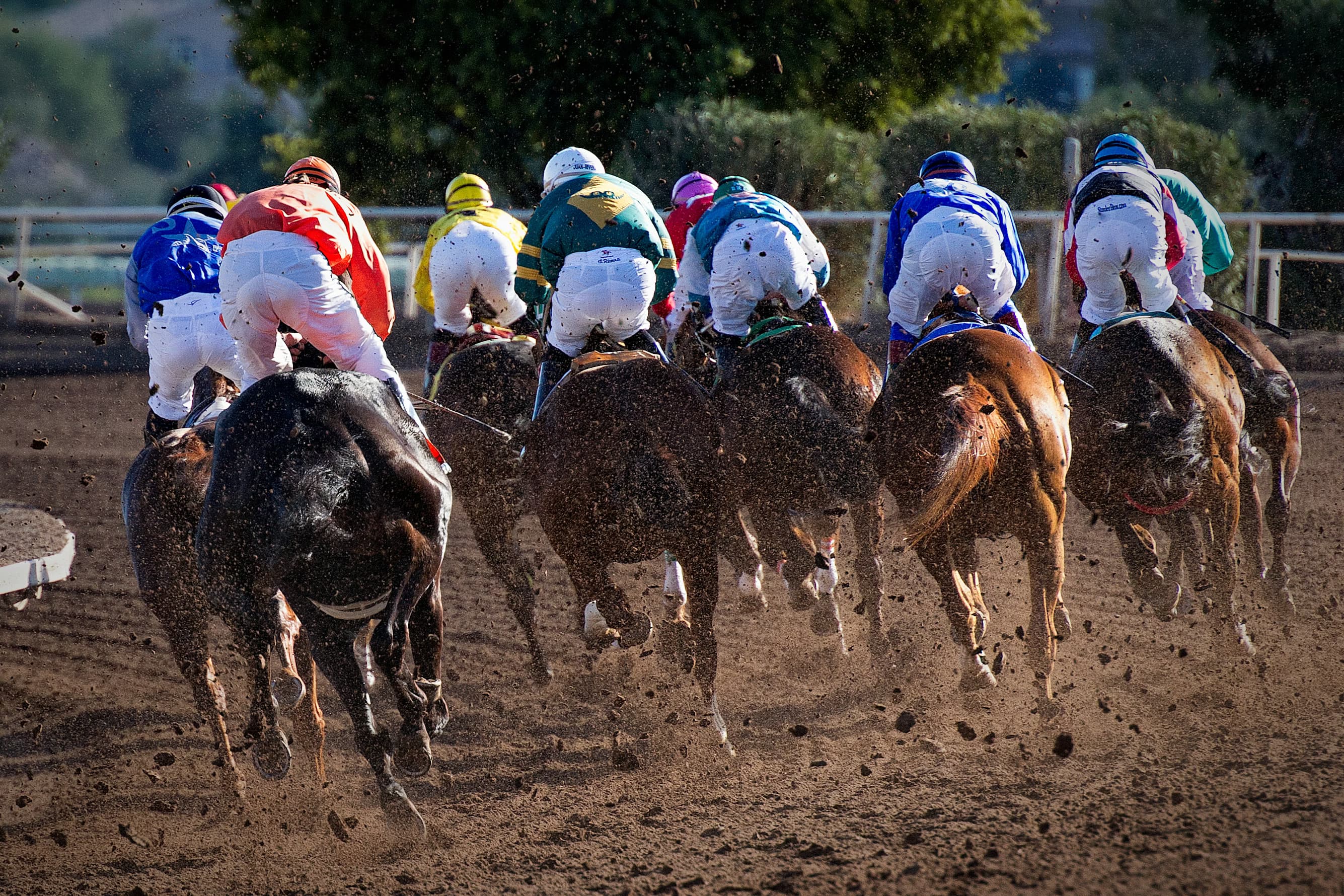
Betting against the public in horse racing means deliberately wagering against the most popular horses — typically overbet favorites — when the crowd's enthusiasm has pushed their odds below fair value. Historically, betting favorites win roughly 33% of the time in North American thoroughbred racing, yet they attract over 50% of the total win pool dollars. This imbalance creates a persistent edge for contrarian bettors who can identify when public money has distorted the true probability of an outcome. In April 2026, as the sport enters its highest-profile stretch from the Derby trail through the Belmont Stakes, understanding crowd psychology is one of the most profitable skills a bettor can develop.
Why Does the Public Overbets Certain Horses?
The pari-mutuel system is uniquely susceptible to crowd bias because the odds are determined entirely by how much money flows into each betting pool. Unlike fixed-odds sportsbooks, there is no bookmaker to correct the market. The crowd is the market. And crowds make predictable mistakes.
Recency bias is the most powerful distortion. A horse that won its last race impressively — particularly on a national television broadcast — will attract disproportionate money in its next start. Data from 2025–2026 shows that horses coming off visually impressive victories are bet down an average of 1.4 points below their morning line, while their actual win rate only marginally exceeds expectation. The visual memory of that dramatic stretch run overrides a sober analysis of whether the horse faces tougher competition today.
Name recognition amplifies this effect during marquee events. In graded stakes races during the 2025 spring season, the top three betting choices received 68% of the win pool — yet combined to win only 52% of those races. The remaining 48% of winners came from horses receiving just 32% of the money. That gap is where contrarian value lives.
Other common public biases include:
- Favorite-longshot bias: Bettors undervalue mid-range odds (4/1 to 10/1) while overvaluing short-priced favorites and extreme longshots
- Jockey worship: Star jockeys like Irad Ortiz Jr. or Flavien Prat attract money regardless of the horse underneath them, sometimes depressing odds 15–20% below fair value
- Post-time panic: Late money flooding in on a horse that "looks good in the paddock" often reflects herd behavior rather than genuine information
- Narrative bias: Horses with compelling storylines — comeback runners, celebrity owners, sentimental connections — attract casual money that has nothing to do with handicapping
How Do You Identify When a Favorite Is Overbet?
The key metric is the discrepancy between a horse's morning line odds and its actual tote board odds at post time. The morning line is set by a track handicapper days before the race, based purely on form analysis. While imperfect, it serves as a useful anchor.
When a horse's morning line is 5/1 but it goes off at 5/2, that tells you public money — not new information — has compressed the odds. Not every such move is unjustified, but systematic analysis shows that horses bet down more than 40% from their morning line in non-stakes races underperform their implied probability by approximately 6–8%.
Here is a practical framework for spotting overbet favorites:
- Compare morning line to live odds: Flag any horse whose odds have been cut by more than half
- Check the source of money: If a horse's odds are dropping on a Saturday with high casual handle but the professional syndicates are not loading up on the horse, that is a red flag that the money is "dumb money"
- Evaluate the actual form: Does the horse's Beyer Speed Figure, class level, and pace projection justify being the shortest price on the board? If you cannot independently justify the odds, the public is likely wrong
- Look at pool distribution: In races where the favorite is receiving 45%+ of the win pool, the remaining horses are almost always offering positive expected value as a group
Tools like [StrideOdds](https://www.strideodds.ai) use AI to detect these discrepancies automatically, comparing algorithmic probability estimates against real-time pool data to flag overbet favorites and identify contrarian plays.
What Is the Best Contrarian Betting Strategy for Horse Racing?
Pure contrarianism — blindly betting against every favorite — does not work. Favorites win too often for that approach to be profitable. The edge comes from selective contrarianism: fading the public only when specific conditions align.
The most proven contrarian approach involves three filters:
1. Vulnerable Favorite Profile
Target favorites that exhibit at least two of the following weaknesses:
- Coming off a career-best performance (likely to regress)
- Stepping up significantly in class
- Facing a pace scenario that works against their running style
- Switching from their preferred surface (dirt to turf or vice versa)
- Running back on shorter rest than their optimal pattern
2. Live Alternatives Exist
A contrarian play only works if there is a legitimate contender being overlooked. Look for second or third choices on the morning line that have drifted to higher odds because the public has fixated on the favorite. Horses in the 4/1 to 12/1 range that you can independently handicap as contenders are the sweet spot.
3. Pool Conditions Favor You
The contrarian edge is largest in races with heavy casual betting — Saturday feature races, televised stakes, and especially the Triple Crown series. In midweek maiden claimers with thin pools dominated by professionals, the odds are more efficient and the contrarian angle is weaker.
During the 2025 Breeders' Cup at Del Mar, five of the fourteen races were won by horses that went off at 6/1 or higher, while the post-time favorite won just four races. Bettors who applied a disciplined contrarian framework to that event found substantial value throughout the card.
How Do You Structure Exotic Bets Using a Contrarian Approach?
Contrarian thinking is most powerful in exotic wagering — exactas, trifectas, and multi-race bets — because pool distortions compound. When the public loads up on a favorite in one race, the payoffs for combinations that exclude that horse become inflated far beyond their true probability.
Here is how to leverage this in practice:
- Exacta wheels against the favorite: If you believe the favorite is overbet, place exactas keying your preferred contenders over and under multiple secondary horses. When the favorite finishes second or third, the exacta payoff will be significantly higher than the true odds warranted
- Trifecta tickets without the chalk: In a ten-horse field where the favorite attracts 40% of the win pool, constructing a trifecta ticket that uses three or four non-favorite contenders in the top slot — with broader coverage underneath — can produce outsized payoffs at a reasonable cost
- Pick 4 and Pick 5 strategies: Use contrarian singles — horses you believe are strong contenders that the public is ignoring — to keep your ticket costs down while building toward pools the public is not reaching. A single contrarian "A" play in a multi-race sequence can cut your ticket cost in half while accessing payoff ranges the public cannot reach
The principle is always the same: when the crowd concentrates money on one outcome, every other outcome becomes relatively overpriced. Your job is to determine which of those other outcomes has a genuine chance.
When Is It Wrong to Bet Against the Public in Horse Racing?
Contrarianism fails when the public is right for the right reasons. Some favorites deserve to be heavily bet. A horse like Fierceness in early 2025 drew heavy action because the form genuinely supported a dominant probability — fading that type of horse systematically would be costly.
Avoid contrarian plays when:
- The favorite has a massive class edge: If a Grade 1 winner is dropping into an allowance race, the public is probably right to bet them down
- Speed figures confirm dominance: When the favorite's best figure is 5+ points above every other runner and the pace setup is favorable, the odds compression is justified
- The race shape is one-dimensional: In races with only one closer and a suicidal pace among the front-runners, the lone closer may be the favorite for a reason — there is no contrarian angle if no other running style is represented
- Professional money confirms the favorite: When the late odds movement is driven by sharp syndicates — detectable through sudden, large drops in the final minutes of betting — the favorite's price often reflects genuine edge rather than public bias
The disciplined contrarian bettor is not someone who hates favorites. They are someone who recognizes the specific conditions under which public enthusiasm creates mispriced odds — and only acts when the math is in their favor.
How Can AI Help You Bet Against the Public More Effectively?
Modern AI platforms have transformed contrarian analysis from gut instinct into data science. By processing thousands of races, an algorithm can quantify exactly how much a horse is overbet relative to its true probability, accounting for speed, class, pace, surface, and dozens of other variables simultaneously.
[StrideOdds](https://www.strideodds.ai) leverages a proprietary algorithm that compares each horse's AI-generated win probability against real-time pari-mutuel pool data. When the gap between predicted probability and implied probability from the odds exceeds a defined threshold, the system flags the race as having contrarian opportunity. This removes emotion, narrative bias, and recency effects from the equation.
In the 2026 spring meet data so far, AI-flagged contrarian plays in races where the favorite attracted more than 40% of the win pool have returned a positive ROI of approximately 14% on win bets and significantly more in exotic structures. That is not a guarantee of future results, but it demonstrates the systematic nature of the public's mistakes.
The key advantages of AI in contrarian betting:
- Speed: AI processes pool data, odds movement, and form analysis in real time — something no human can replicate across a full card
- Objectivity: The algorithm does not care about a horse's name, its owner, or last week's highlight reel
- Pattern recognition: AI identifies historical patterns — such as which types of favorites underperform most often at specific tracks and distances — and applies those patterns to today's card
- Bet structuring: Advanced platforms can optimize exotic ticket construction to maximize the contrarian payout while controlling cost
As the spring racing calendar heats up with the Kentucky Derby on May 2, the Preakness in mid-May, and summer meets at Saratoga and Del Mar on the horizon, public betting volumes will surge. Casual money will pour into familiar names and compelling storylines. For the disciplined contrarian bettor armed with data, this is the most profitable stretch of the year.
The crowd is not always wrong. But when it is, the pari-mutuel system pays you handsomely for being right.
Written by StrideOdds.