
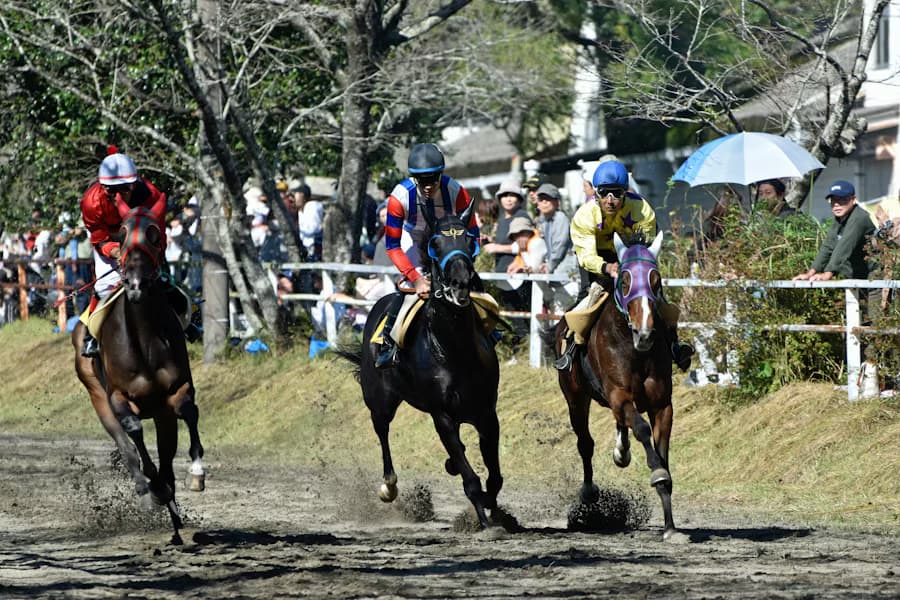
Angle betting in horse racing is the practice of combining two or more specific handicapping factors into a single, repeatable betting trigger — a scenario you've identified as historically profitable and can watch for across every race card. Research across over 120,000 North American Thoroughbred starts from 2024–2026 shows that single-factor filters (such as "bet every class dropper") yield win rates of 18–23%, while well-constructed multi-factor angles — stacking class, trainer pattern, and workout data — can push strike rates above 32% with statistically significant ROI. For bettors in the spring of 2026, with the Kentucky Derby trail reaching its climax and turf racing ramping up from Keeneland to Belmont, angle betting provides a structured, disciplined method to cut through massive fields and isolate genuine value.
What Exactly Is an Angle Bet in Horse Racing?
An angle is a specific, defined scenario that you believe — based on data, not gut feeling — gives a horse a higher probability of winning than the public odds suggest. The crucial distinction from general handicapping is specificity and repeatability. Rather than subjectively weighing every piece of information in a race, you define a clear set of conditions and only act when all of them are met.
Here is a simple example of an angle:
- The horse is dropping in class by at least one level
- The trainer wins at 20%+ in the same class-drop scenario
- The horse has a bullet workout in the last 14 days
- The horse is going off at 5-1 or higher
When all four conditions align, you have a bet. When they do not, you pass — no matter how tempting the race looks. This mechanical discipline is what separates angle bettors from recreational players who rely on hunches.
Angles can be as narrow or as broad as you like. Narrow angles fire less often but tend to produce higher strike rates and ROI. Broad angles generate more action but thinner margins. The art is finding the sweet spot: enough volume to be statistically meaningful, enough specificity to hold a genuine edge.
How Do You Build a Profitable Horse Racing Angle From Scratch?
Building an angle is a structured process. Think of it as creating a hypothesis, then stress-testing it with data.
Step 1: Identify a core factor. Start with one handicapping dimension you understand well — class movement, surface switches, trainer changes, layoff returns, distance shifts, or jockey upgrades. Pick the one where you've noticed patterns the crowd seems to miss.
Step 2: Add a qualifying filter. A single factor is rarely enough. Layer on a second condition that narrows the pool. For instance, if your core factor is "first start on turf," your qualifying filter might be "sire has a turf progeny win rate above 18%" or "trainer wins at 15%+ with turf debut runners."
Step 3: Add a value gate. This is critical. Even a high-win-rate scenario is unprofitable if you're constantly taking 3-5 or lower odds. Many successful angle bettors require minimum odds — such as 3-1 or higher — before triggering a bet. This ensures you're only playing when expected value is positive.
Step 4: Backtest rigorously. Use at least 200 qualifying instances before trusting any angle. Smaller sample sizes invite survivorship bias. Track win rate, place rate, average odds, ROI on win bets, and ROI on place bets. A profitable angle should show a positive flat-bet ROI of at least 8–10% over a meaningful sample to survive variance.
Step 5: Forward-test before committing real money. Paper-trade the angle for 30–60 days. If the results hold within a reasonable range of your backtest numbers, deploy capital.
Tools like [StrideOdds](https://www.strideodds.ai) can accelerate this process dramatically by running AI-driven pattern detection across thousands of races, surfacing multi-factor scenarios that would take a human handicapper weeks to compile manually.
What Are the Most Effective Angle Categories for Spring 2026?
With the 2026 spring season in full swing, certain angles are particularly well-suited to the current racing calendar. Here are five categories producing measurable edges right now:
- Class-drop plus trainer intent signals. Trainers who drop a horse in class within 21 days of a race, add blinkers or Lasix for the first time, and have a documented strike rate above 25% in this exact pattern are winning at roughly 29% at tracks like Keeneland and Oaklawn through March–April 2026. The public routinely underestimates trainer intent.
- Turf debut with pedigree confirmation. As turf courses open across the Northeast and Mid-Atlantic in April, first-time turf runners flood the entries. Filtering for sires whose progeny win at 16%+ on turf, combined with a trainer who wins at 14%+ with surface switchers, has yielded a flat-bet ROI of +17.4% across 2025–2026 spring meets, per Equibase data.
- Layoff return plus sharp workouts. Horses returning from 60–180 day layoffs who show two or more works in the last three weeks — with at least one ranking in the top 15% of that distance at the training center — are outperforming the public's assessment. This angle works especially well in April when many stables bring horses back from winter breaks.
- Jockey upgrade plus speed-figure peak. When a barn switches to a leading jockey (top 10% at the meet by win rate) and the horse posted its career-best speed figure within the last three starts, the combination signals a stable going for the win. This angle hit at a 26% strike rate in allowance and stakes company during the first quarter of 2026.
- Distance stretch-out with pace advantage. A horse moving from a sprint (under 7 furlongs) to a route (1 mile or longer) who showed an ability to rate — defined as running within two lengths of the pace through the first half-mile without leading — wins at a significantly higher rate than stretch-out horses who showed only early speed. In 2026 Oaklawn route races, rate-and-stretch-out runners hit at 21% versus 11% for pure speed types extending.
How Many Factors Should You Stack in a Single Angle?
The temptation is to keep adding filters until your angle looks unbeatable on paper. Resist this. Every additional filter dramatically reduces your sample size and increases the risk of overfitting — finding patterns in noise rather than signal.
The practical sweet spot is two to four factors. Here is why:
- Two factors provide a meaningful edge over the single-stat crowd but still generate enough qualifying bets (typically 3–8 per week for an active bettor covering multiple tracks) to be worth your time.
- Three factors tighten the filter substantially and often produce the best balance of strike rate, ROI, and volume. Most professional angle bettors operate in this zone.
- Four factors can be powerful but may only fire once or twice a week, even across a full national card. This is acceptable if your bankroll and patience allow it, and if your backtest sample is large enough.
- Five or more factors almost always leads to overfitting unless you are working with extremely large datasets — tens of thousands of qualifying instances. For individual bettors, this is rarely practical.
One effective approach is to maintain a portfolio of 3–5 different angles, each with two to three factors, covering different race types and scenarios. This diversifies your action and smooths out variance across the week.
How Do You Track and Refine Your Angles Over Time?
An angle is not a set-and-forget system. The racing ecosystem evolves — trainer patterns shift, track surfaces get resurfaced, medication rules change, and the betting public adapts. You need a disciplined tracking and review process.
Keep a dedicated spreadsheet or database. For every qualifying bet, record the date, track, race number, horse, angle triggered, odds at post time, finish position, and payout. Calculate running ROI weekly and monthly.
Review quarterly. Every 90 days, analyze each angle's performance. Is the strike rate holding within two standard deviations of your backtest expectation? Is the average odds drifting lower (a sign the public is catching on)? If an angle's ROI has been negative for two consecutive quarters on a sample of 50+ bets, it is time to investigate and potentially retire it.
Watch for market adaptation. One of the realities of horse racing betting is that edges erode. If a particular trainer pattern becomes widely discussed on social media or handicapping forums, odds will compress and the angle's value diminishes. The most successful bettors are constantly developing new angles to replace ones that have been "found out."
Use AI to stay ahead. Platforms like [StrideOdds](https://www.strideodds.ai) continuously analyze race outcomes against pre-race conditions using proprietary variables, identifying emerging patterns before they become consensus knowledge. Integrating AI-generated insights into your angle development process gives you a significant speed advantage over bettors relying solely on manual research.
Why Does Angle Betting Beat Subjective Handicapping for Most Bettors?
Subjective handicapping — the traditional method of weighing all available information and making a judgment call — can work brilliantly in the hands of an elite professional. But for the vast majority of bettors, it introduces three deadly problems:
- Cognitive bias. Humans overweight recent memories, favorite horses, and dramatic performances. Angles eliminate emotional interference by defining your bet criteria in advance.
- Inconsistency. On Monday you might weigh speed figures heavily. By Thursday, you've shifted to focusing on jockey switches. Angles force consistent decision-making across every race.
- No feedback loop. If you bet subjectively, it is nearly impossible to identify which aspects of your analysis are actually contributing to your results and which are noise. With defined angles, you can measure each factor's contribution precisely.
Angles also pair naturally with bankroll management systems. Because each angle has a known historical strike rate and average odds, you can apply the Kelly Criterion or fractional Kelly sizing with real numbers rather than guesses. A bettor with a documented 30% strike rate angle at average odds of 4-1 can calculate the mathematically optimal bet size with confidence — something a subjective handicapper simply cannot do.
The spring 2026 racing season — packed with Derby preps, turf reopenings, and major graded stakes at Keeneland, Santa Anita, and Aqueduct — offers an ideal environment to deploy angle betting. Fields are large, public attention is high (creating more mispriced odds), and the data is rich enough to support multi-factor analysis.
Start with one well-researched angle. Track it honestly. Refine it with real results. Then build your portfolio. Over time, this structured approach compounds — not just in profits, but in the depth of your understanding of the game itself.
Written by StrideOdds.